
Article Directory
- 1 Start with the Application, Then Write the Material
- 2 Specify the Scrim: Yarn Denier and Weave Density
- 3 Define Total GSM and the Coating System
- 4 Request Numeric Mechanical Values: Tensile, Tear, and Adhesion
- 5 Fix Roll Width, Length, and Dimensional Tolerances
- 6 Add Environmental and Safety Acceptance Criteria
- 7 Assemble the RFQ: Twelve Parameters for a Comparable Quotation
- 8 Frequently Asked Questions About PVC Tarpaulin RFQs
Two suppliers quoted the same one-liner, “650 gsm PVC tarpaulin,” and the prices diverged by nearly 40 percent. The variance was not the weight; it was everything the weight did not say.
One roll failed at the grommet within a month of installation. The other was so heavily built that the buyer paid for strength the application never demanded. Both outcomes trace to the same root cause: an RFQ that reduced a complete material system to a single number. A PVC tarpaulin specification is the documented set of construction and performance parameters, including scrim yarn denier, weave density, total coated weight, coating formulation, mechanical ratings, and dimensional tolerances, that determines whether the fabric survives its intended service. The twelve parameters in this guide turn a vague request into a comparable, enforceable quotation.
Core definition: A PVC tarpaulin specification is the full set of construction and performance parameters that allows a factory to reproduce the same material across batches and allows a buyer to compare supplier quotations on identical terms.
Start with the Application, Then Write the Material
The application determines which specification parameters are critical, so the RFQ should describe the end use and operating environment before it states any technical value. A flatbed truck cover must tolerate abrasion, UV, and repeated flexing at highway speed; an inflatable ride must hold air and weld cleanly; a mine ventilation duct must resist flame and static buildup. The same total GSM can be ideal for one use and unsafe for another.
State the loading method, weather extremes, chemical exposure, expected service life, and the fabrication method the fabric will undergo, such as high-frequency welding, hot-air welding, or stitching. Those facts let the factory propose a construction instead of quoting a generic stock roll.
| Application | Leading parameters | Typical GSM range |
| Truck and logistics covers | Abrasion, UV resistance, flex fatigue, waterproofing | 610-900 gsm |
| Tents and temporary shelters | Tear strength, flame retardancy, color fastness | 380-1050 gsm |
| Inflatable structures and boats | Airtightness, weldability, seam strength | 650-1500 gsm |
| Mine and tunnel ventilation ducts | Flame retardancy, antistatic, lay-flat flexibility | 380-750 gsm |
| Pool liners and water structures | Hydrostatic resistance, print adhesion, plasticizer stability | 600-750 gsm |
A tent manufacturer, for example, typically compares 1000D constructions at 610-650 gsm before deciding whether heavier 850 gsm panels are needed for wind-loaded shelters. The chart below shows how total GSM bands cluster by application and why copying a weight from one product group into another RFQ rarely works.
Typical total GSM ranges by application
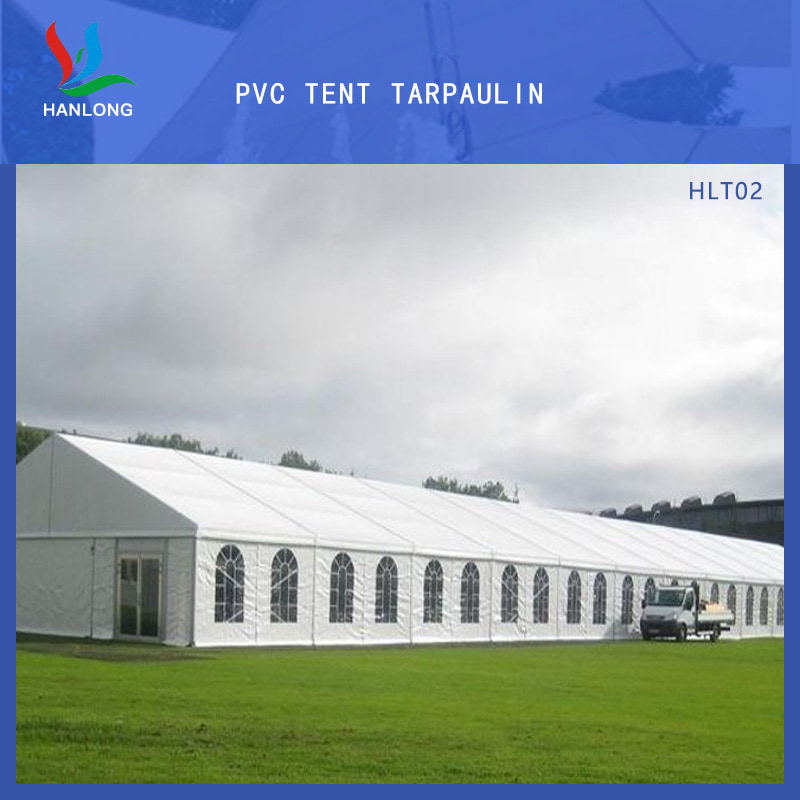 1000D 20x20 PVC Tent Tarpaulin Fabric in 610 and 650 GSMThis 1000D polyester tent fabric with 20x20 weave and PVC coating offers high tear strength and waterproofing. It suits tents, awnings, and truck covers, matching the GSM bands discussed here.View Product →
Specify the Scrim: Yarn Denier and Weave Density
The polyester scrim carries the mechanical load, and the PVC layer protects that load-bearing structure, so yarn denier and weave density determine tensile and tear performance more than any other variable in the RFQ. Denier describes yarn linear density: 500D suits bags, awnings, and light covers; 840D suits medium industrial use; 1000D is the heavy-duty standard for truck covers, high-speed doors, and inflatables; 1300D and above appear where tear resistance dominates.
Weave density is the number of warp and weft threads per unit length, typically written as warp x weft. Standard PVC tarpaulin constructions range from about 9x9 to 30x30; a higher count means more yarn per area, higher strength, and heavier fabric. In the RFQ, write the scrim exactly as factories read it: “1000D x 1000D, 18x18, 610 gsm total.” That single string removes most of the ambiguity that causes failed first articles.
- State yarn denier in warp and weft, in the form warp x weft.
- State thread count per inch or per 10 cm, in the form warp x weft.
- Add special scrim requirements such as flame-retardant yarn or hydrolysis-resistant polyester.
Define Total GSM and the Coating System
Total GSM is the most quoted number in tarpaulin buying, but it becomes meaningful only when the scrim weight and the coating system are separated. GSM is the sum of scrim mass plus PVC mass, and a 610 gsm fabric can carry a heavy scrim with a light coating or a light scrim with a heavy coating — two very different materials at the same total weight. Ask the factory to state the coating add-on separately whenever surface wear or weld behavior matters.
Specify whether the material is PVC coated or PVC laminated, because the process changes adhesion, surface finish, weld behavior, and price.
PVC coated
- PVC paste fused directly into the scrim structure
- Higher peel adhesion and abrasion follow-through
- Matte, slightly textured surface
- Typical for truck covers, ducts, and industrial tarps
PVC laminated
- PVC film bonded onto the scrim surface
- Smoother print surface and controlled gloss
- Consistent behavior in high-frequency welding
- Typical for bags, banners, and striped tarps
Consistent GSM across batches directly affects welding yield and finished-panel weight. Our guide to GSM consistency and tolerance explains the sampling method and acceptable spread to include in the RFQ. In cold climates, also fix a plasticizer level or cold-flex temperature; plasticizer loss is the primary cause of cracking in PVC tarpaulin after years of UV exposure.
Request Numeric Mechanical Values: Tensile, Tear, and Adhesion
“Heavy duty” is not a test method, so every RFQ should request tensile strength, tear strength, and coating adhesion measured against a named standard such as ISO 1421, ISO 4674, or ASTM D751, with target values for the exact construction being quoted. The table below gives indicative ranges for common constructions; confirm the method with each factory, because values may vary by 10 to 15 percent between manufacturers.
| Construction | Tensile strength (warp x weft) | Typical use |
| 500D x 500D, 18x16, 400 gsm | 900-1,200 N/5cm | Bags and light covers |
| 1000D x 1000D, 18x18, 610 gsm | 1,900-2,300 N/5cm | Truck tarps and tents |
| 1000D x 1000D, 30x30, 1,050 gsm | 2,800-3,400 N/5cm | High-speed doors and inflatables |
A common reference point for truck covers is the 1000D x 1000D 18x18 610 gsm construction, which balances tensile performance with handling weight and fabrication cost. When the fabric must also resist punctures or impact, request a tear value and a puncture test rather than assuming a higher GSM solves the problem.
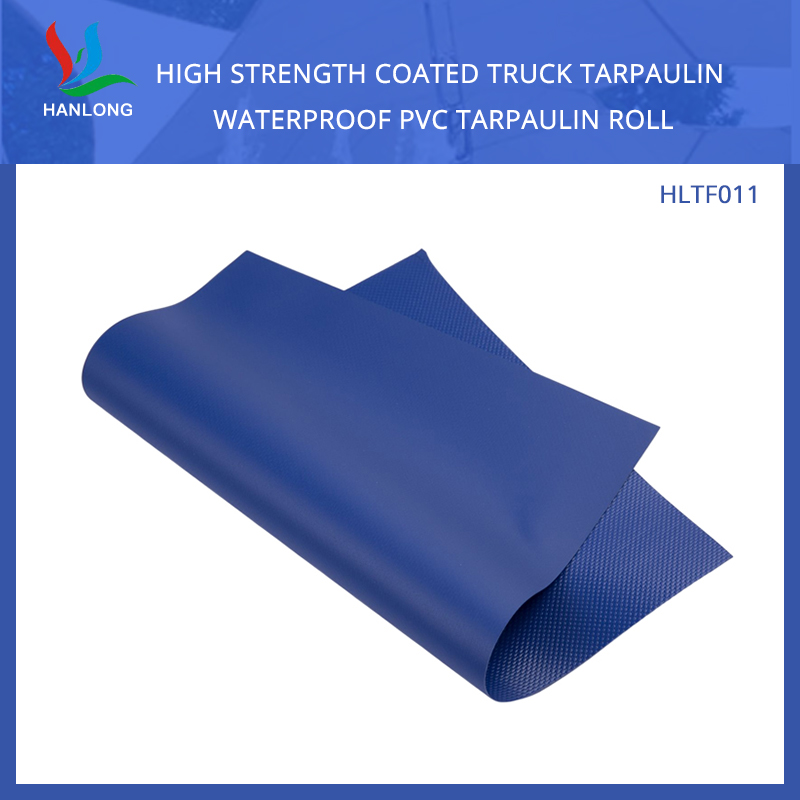 1000D x 1000D 18x18 610 GSM PVC Truck Tarpaulin RollHigh-tenacity polyester with PVC coating gives this 610 GSM truck tarpaulin a balanced combination of flexibility and mechanical resistance. It is a common reference point for truck covers mentioned above.View Product →
Fix Roll Width, Length, and Dimensional Tolerances
A technical sheet is incomplete until it fixes roll width, roll length, tolerance, and edge finishing, because these values control yield and fabrication cost as directly as tensile strength does. Standard widths for PVC coated fabric are 1.5 m, 2.0 m, 2.5 m, and 3.2 m, while rolls are quoted by length in meters or by weight in kilograms. Request the actual dimensional tolerance, typically plus or minus 2 percent for width and plus or minus 5 percent for GSM on coated tarpaulin.
Edge type matters in the field: a cut edge sheds yarns and can wick water, while a welded or folded and stitched hem seals the panel edge. For finished tarps, distinguish cut size from finished size, and specify hem allowance, seam method (high-frequency, hot air, or stitching), and grommet spacing. In corrosive environments such as ports or chemical yards, specify stainless steel or brass grommets rather than zinc-plated steel.
Before fixing these values, review our roll width, length, and surface guide, which compares the trade-offs of standard widths and surface gloss options.
Add Environmental and Safety Acceptance Criteria
Fire, UV, and low-temperature performance are usually mandatory acceptance criteria for outdoor and underground use, so write them as testable requirements with named standards rather than adjectives. The statement “flame retardant tarpaulin” without a standard cannot be verified, compared, or rejected at inspection.
- Flame retardancy: nominate the applicable standard, such as EN 14115, NFPA 701, or the local requirement for tents and temporary structures.
- UV resistance: specify hours of xenon-arc exposure, for example 1,000 to 2,000 hours, or a field warranty of two to five years in the target climate.
- Cold flexibility: set a test temperature such as -20°C or -30°C, especially for truck covers and ducts used in cold regions.
- Antistatic requirement: relevant for mine ventilation ducting, where surface resistance must meet safety thresholds for explosive atmospheres.
A buyer sourcing fabric for collapsible mine ventilation ducts, for example, should combine flame retardancy, antistatic limits, and lay-flat flexibility into one parameter block; the duct fabric market is spec-driven, and loose descriptions produce dangerous substitutions.
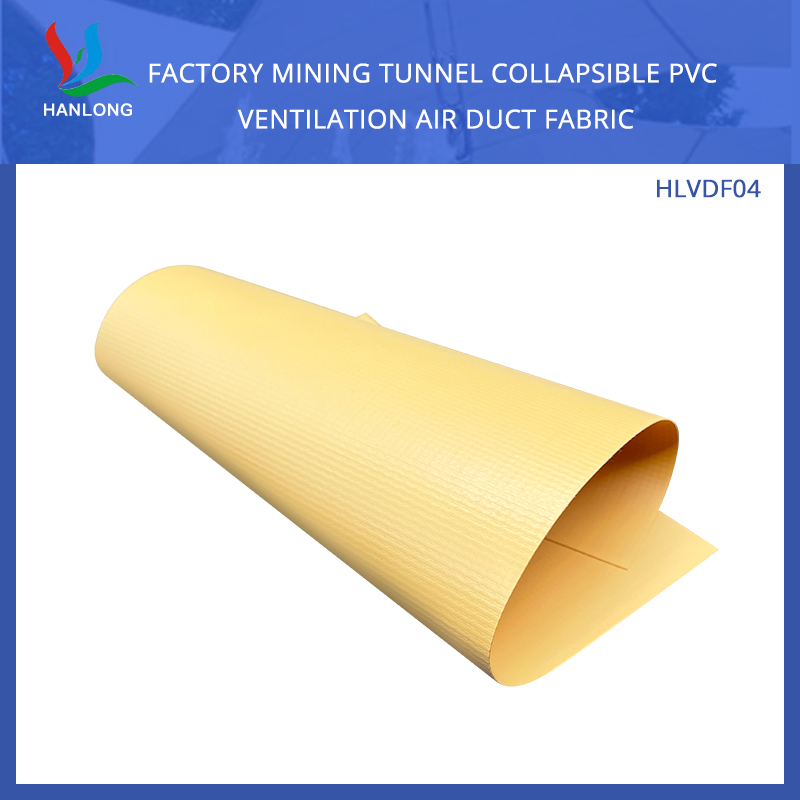 1000D x 1000D 12x12 550 GSM PVC Ventilation Duct FabricMade for mining and tunnel ventilation, this foldable PVC-coated fabric combines flame retardancy, antistatic limits, and lay-flat flexibility. Its 550 GSM density and 1000D yarns ensure durability in demanding conditions.View Product →
Assemble the RFQ: Twelve Parameters for a Comparable Quotation
Sending the same parameter block to every supplier is the fastest way to improve procurement quality, because it forces comparison on identical terms. Use the twelve fields below as the skeleton of your RFQ, and require the supplier to confirm each one in writing.
- End use, operating environment, and expected service life
- Roll or finished format with dimensions and quantity
- Scrim specification: yarn denier and weave density, warp x weft
- Total GSM and coating type: coated or laminated
- Coating add-on or plasticizer level when critical
- Test standards and target values for tensile, tear, and adhesion
- Flame retardancy requirement with named standard
- UV resistance rating and test method
- Cold-flex temperature
- Dimensional tolerances for width, GSM, and length
- Edge, seam, grommet, hem, and hardware requirements
- Packaging, roll labeling, and inspection documents
An integrated manufacturer that weaves its own scrim and applies its own coating, such as ZheJiang Hanlong New Material Co., Ltd., can quote and control these twelve parameters in one plant, which shortens the chain of responsibility compared with a trading company. Ask every candidate supplier to answer the same list in the same order, and request test reports together with the quotation.
Frequently Asked Questions About PVC Tarpaulin RFQs
Is GSM the most important number in a PVC tarpaulin specification?
No. GSM describes total mass, but strength comes from the scrim. A 650 gsm fabric on a tight 1000D scrim outperforms a 750 gsm fabric on a loose 500D scrim. Treat GSM as one variable among scrim denier, weave density, and coating add-on.
Which is better in an RFQ: PVC-coated or PVC-laminated tarpaulin?
Neither is universally better. Coated fabric fuses PVC into the scrim for high adhesion and abrasion, which suits truck covers and industrial use. Laminated fabric bonds a film to the surface for cleaner printing and welding, which suits bags, banners, and decorative tarps. Choose by fabrication method and surface requirement.
What tolerance should the RFQ request for GSM and width?
A common commercial tolerance is plus or minus 5 percent for GSM and plus or minus 2 percent for roll width on coated tarpaulin. Tighter values are possible but raise cost, so state the tolerance your downstream fabrication can accept instead of asking for laboratory precision.
How do I compare two PVC tarpaulin quotations fairly?
Send the same twelve-parameter RFQ to each supplier, request test reports to the same standards, and compare price per usable square meter at the stated tolerance rather than price per kilogram or per roll.


 Home
