
Article Directory
- 1 The polyester scrim sets the structural ceiling
- 2 Plastisol formulation decides how the fabric ages
- 3 Coating versus lamination: two routes, different behavior
- 4 Six performance attributes to verify on the spec sheet
- 5 Quality control is where supplier reliability is built
- 6 Match the construction to the job
- 7 Frequently asked questions
Two PVC tarpaulin rolls can carry the same 1000D x 1000D label, the same 18 x 18 thread count, and the same 610 gsm weight, yet one stays watertight for a decade while the other stiffens, whitens, or delaminates within two seasons. That difference is not luck: it is the accumulated result of decisions made in the weaving room, the plastisol lab, and the coating line. This guide explains the key factors that control PVC tarpaulin fabric performance, so sourcing and product-development teams can verify the right data before placing an order.
The polyester scrim sets the structural ceiling
The woven polyester scrim is the structural skeleton of a PVC tarpaulin, and it determines most of the finished material's tensile strength, tear resistance, and dimensional stability.
The first specification on any data sheet is yarn denier: 500D, 840D, 1000D, 1300D, or 1500D. Denier measures yarn linear density; higher values mean thicker, stronger polyester filaments. The thread count, such as 18 x 18 or 30 x 30, describes how tightly those yarns are woven. A 1000D x 1000D 18 x 18 construction is the most common balanced specification because it combines strength, flexibility, and coating hold-out. Dense 30 x 30 weaves improve dimensional stability and make airtight coatings easier to achieve, while more open weaves let plastisol penetrate deeper and anchor mechanically, which often improves tear behavior.
Representative warp tensile values, ISO 1421, for guidance only; confirm the exact specification of each grade with the manufacturer.
The practical rule: the scrim determines how much load the fabric can carry, and the coating determines how long the fabric can carry that load outdoors.
Heavy scrims such as 1300D x 1300D or 1500D x 2000D are reserved for demanding industrial roles. Mine ventilation duct fabric, for example, needs a heavy, abrasion-resistant base to survive rough handling inside tunnels.
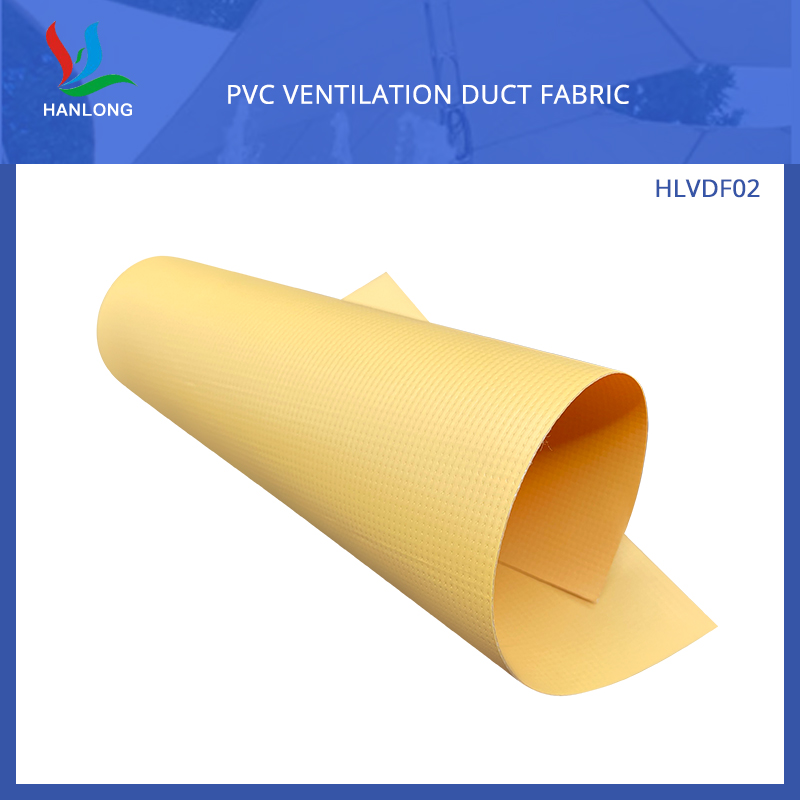 1300D x 1300D 12x12 550gsm PVC Ventilation Duct FabricThis heavy 1300D x 1300D ventilation duct fabric suits demanding industrial roles like mine ventilation, offering abrasion resistance, corrosion resistance, and stable performance from -20°C to +70°C.View Product →
Plastisol formulation decides how the fabric ages
Plastisol formulation, not the cloth alone, controls how a tarpaulin ages in sunlight, cold, and repeated folding.
Plastisol is a liquid dispersion of PVC resin in plasticizer, blended with stabilizers, UV absorbers, flame retardants, and biocides. The plasticizer level sets flexibility and cold resistance, but too much plasticizer increases surface migration over time, leaving the fabric tacky and prone to dirt pickup. UV stabilizers separate a two-season fabric from a ten-season one: without them, the polymer whitens and loses tear strength. Flame-retardant additives must not weaken the bond between coating and scrim.
For inflatable water products, plastisol must also hold air. A 1000D x 1000D 30 x 30 construction with a heavy, carefully formulated coating is the classic airtight grade for inflatable rides and water toys.
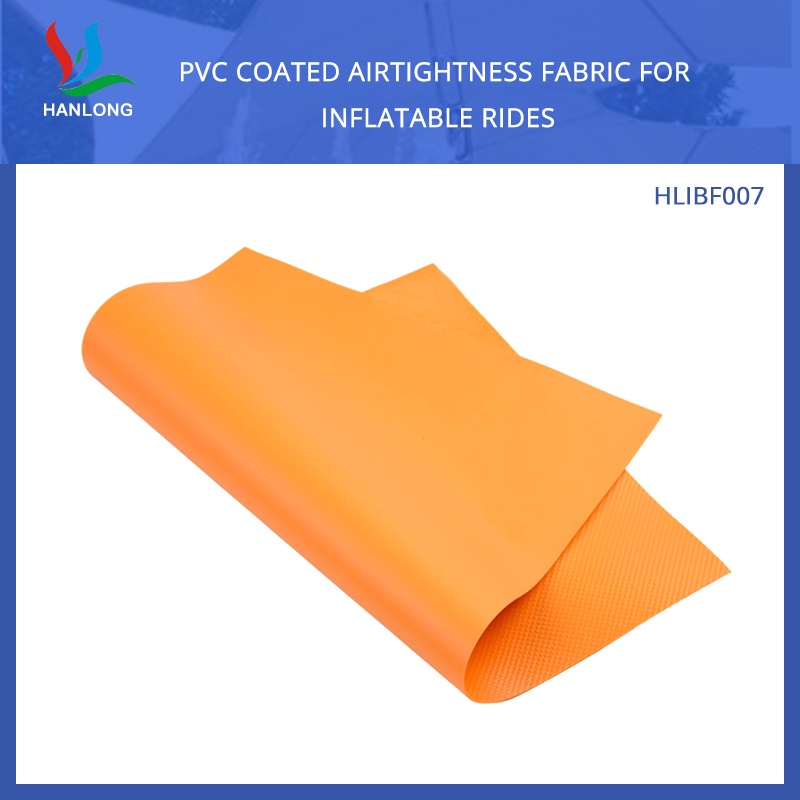 1000D x 1000D 30x30 1500g Airtight PVC Fabric for Inflatable RidesDesigned for high-pressure inflatable water structures, this 1000D x 1000D 30x30 fabric with a thick 1500g coating ensures complete airtightness, buoyancy, and UV/moisture resistance.View Product →
Plasticizer migration is a formulation property, not only a batch defect. Ask the supplier what plasticizer system they use, and request cold-flexibility and migration data for the proposed grade.
Coating versus lamination: two routes, different behavior
Coating and lamination are two manufacturing routes that produce visually similar materials with different adhesion, flexibility, and cost.
In coating, plastisol is applied directly to the scrim with a knife or roller and fused in an oven; the compound penetrates the weave and locks into the yarn, giving high adhesion and a soft drape. In lamination, a pre-cast PVC film is bonded to the scrim with heat and pressure or an adhesive layer, producing a more uniform surface that prints cleanly. At high weights, coating is usually more economical and more resistant to delamination under repeated folding.
Coated construction
- Plastisol penetrates the weave and anchors to the yarn
- High peel resistance for heavy loads
- Efficient at high GSM for truck covers and inflatables
Laminated construction
- Uniform pre-cast film with a smooth surface
- Better printability for banners and advertising
- Lighter options for bags, liners, and daily-use products
Do not choose between coating and lamination by price alone. High-frequency welding behavior, print finish, and fold endurance all differ between the two routes.
Six performance attributes to verify on the spec sheet
Six numbers on the spec sheet, tensile strength, tear strength, coating adhesion, GSM tolerance, water column, and UV resistance, define whether a tarpaulin will survive its job.
Tensile strength shows how much load the fabric takes before rupture; tear strength shows how well a small cut resists growing into a large one. Adhesion measures the bond between PVC layer and scrim, GSM tolerance reveals coating consistency across the roll width, and water column plus UV resistance address rain and solar radiation.
| Attribute | What it indicates | Typical range | Common test method |
| Tensile strength, warp | Maximum load before rupture | 1800-3500 N/5cm | ISO 1421 |
| Tear strength | Resistance to tear propagation | 150-400 N | ISO 4674 |
| Coating adhesion | Bond between PVC layer and scrim | 8-20 N/5cm | ISO 2411 |
| GSM tolerance | Coating weight consistency | +/-10-20 gsm | Sampled weighing |
| Water column | Resistance to water penetration | 2500-4000 mm | ISO 811 |
| UV resistance | Strength and color retention | Grade 4-6 | Xenon arc aging |
GSM consistency is the quiet killer. A roll that fluctuates by more than 20 gsm across its width will weld unevenly, print poorly, and fail earlier at the thinnest point of the coating.
Quality control is where supplier reliability is built
Consistent coating weight, controlled heat history, and disciplined inspection separate reliable PVC tarpaulin manufacturers from commodity sellers.
Quality control starts with greige fabric inspection, continues through plastisol viscosity checks and in-line coating gauging, and ends with batch testing of tensile, tear, adhesion, and GSM. Responsible suppliers keep batch records and can trace every roll to its production parameters. Zhejiang Hanlong New Material Co., Ltd. is an integrated manufacturer that operates its own weaving and processing plants, with an annual output of about 9,070,000 square meters and more than 50 technical and R&D staff.
- Greige scrim inspection: yarn count, weave defects, and moisture level
- Plastisol checks: viscosity, solids content, and additive dosage per batch
- In-line gauging: GSM and thickness monitoring during coating and lamination
- Final sampling: tensile, tear, adhesion, and UV tests on every batch
For a practical route to supplier comparison, work through a complete guide for judging coated tarpaulin quality.
One question reveals a lot: can the supplier show you the GSM spread of the last production batch? The answer says more than any brochure.
Match the construction to the job
Application dictates construction: cargo covers prioritize tear strength, inflatable structures prioritize airtightness, mining ducts prioritize flame resistance and low weight, and tents need balanced all-weather performance.
- Truck and logistics covers: 1000D x 1000D, 18 x 18, 610 gsm, high tear strength and water column
- Inflatable water products: 1000D x 1000D, 30 x 30, 1500 g, airtight plastisol coating
- Mining ventilation ducts: 1300D x 1300D, 12 x 12, 550 gsm, flame-retardant and abrasion-resistant
- Tents and temporary shelters: 500D-1000D, 20 x 20, 610-850 gsm, balanced strength and handle
These starting points are commonly adapted. Most manufacturers adjust yarn count, weave density, coating weight, or additives to hit a target price and performance window, which makes it important to review the manufacturer's range before customization begins.
A heavier fabric is not automatically better. The right construction always beats a heavy but unbalanced specification.
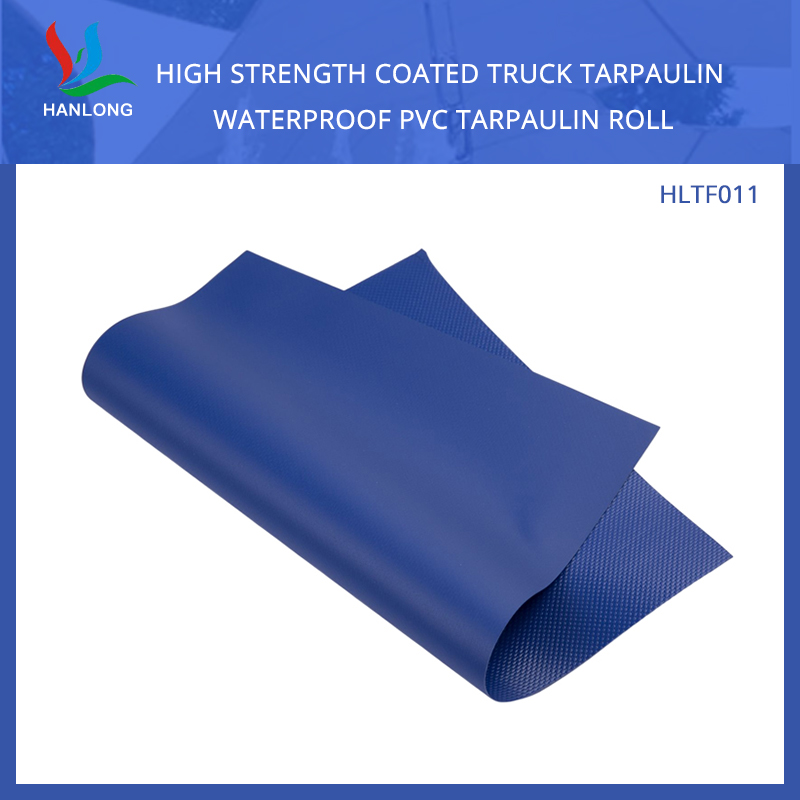 1000D x 1000D 18x18 610gsm Waterproof PVC Truck TarpaulinThis 1000D x 1000D 18x18 610gsm tarpaulin balances flexibility and mechanical strength for truck covering, providing full waterproofing, easy cleaning, and resistance to environmental degradation.View Product →
Frequently asked questions
Before finalizing a PVC tarpaulin specification, buyers usually ask the same four questions.
What does 1000D x 1000D mean in a tarpaulin specification?
D stands for denier, a measure of yarn linear density: 1000D means 9,000 meters of that yarn weighs 1,000 grams. The two values refer to warp and weft yarns, and higher denier means a thicker, stronger yarn.
Why does GSM tolerance matter so much?
GSM tolerance affects pricing, stiffness, welding, and coating evenness. If a 610 gsm fabric runs at 580 gsm in some areas, those areas have thinner coating and become more vulnerable to wear and water ingress.
Is a heavier PVC tarpaulin always stronger?
Not in a useful sense. A 1000D x 1000D 30 x 30 1500 g airtight fabric and a 1500D x 2000D 9 x 9 550 g mining duct fabric serve different jobs. Evaluate strength against the test method and the application, not by weight alone.
What documents should a buyer request from a tarpaulin manufacturer?
Request tensile and tear test reports, GSM tolerance data, UV resistance results, and details on the plasticizer and flame-retardant system. Manufacturers with in-house weaving and coating can usually provide batch traceability for each production run.


 Home
