
Article Directory
Two rolls of nominally identical 650 gsm PVC tent tarpaulin can arrive in the same shipment and behave completely differently on the welding bench: one forms a clean heat seam, the other curls, sticks and bleeds plasticizer. The difference is not bad luck. It is the result of how carefully the fabric was woven, coated, cured and checked, which is why tent manufacturers run a structured PVC coated tent fabric testing and inspection process before any roll reaches the cutting table.
PVC coated tent fabric testing and inspection is the process of verifying that each roll of vinyl-coated polyester matches its declared basis weight, yarn density, tensile and tear strength, coating adhesion, water resistance, flame retardancy and visual surface quality before it is converted into a tent.
The PVC coating carries waterproofing, UV protection, flame resistance and weldability. The polyester scrim underneath carries the load. If the coating is overweight, under-plasticized or poorly adhered, failures appear later as seam delamination, pinhole leaks or cold-crack splitting. Zhejiang Hanlong New Material Co., Ltd., a direct manufacturer with its own weaving and coating plants and an annual output of about 9.07 million square meters of coated fabric, treats testing as a production gate, not a final artifact.
A +/-5% tolerance on a 650 gsm sheet equals about +/-32.5 g/m2 of material mass. On a fast coating line, that spread is the difference between a rainproof panel and a borderline one.
The Seven-Check Inspection Framework
A practical inspection program runs seven checks in a fixed order: identification, basis weight, yarn density, tensile strength, tear strength, coating adhesion and water resistance, followed by application-specific tests such as UV aging, cold flexibility and flame retardancy.
Core definition
The five-percent rule governs most coated fabric quality disputes. A 650 gsm fabric specified at +/-5% can be delivered at 617.5 gsm and still meet contract, a difference large enough to shift tear strength, coating durability and final tent weight.
Core Laboratory Tests and Typical Limits
Weight, yarn density, tensile, tear, adhesion and hydrostatic head are the six measurements that resolve most specification disputes between a tent maker and its fabric supplier.
| Property | Test approach | Typical acceptance |
| Basis weight (gsm) | Five 100 cm2 samples, weighed average | Spec +/-5% |
| Yarn density | Pick glass count per cm | Matches declared construction |
| Grab tensile | ISO 1421 or ASTM D751 | >=1,800 N warp for 1000D (indicative) |
| Trapezoid tear | ISO 4674 or ASTM D5733 | >=150 N, depends on scrim (indicative) |
| Coating adhesion | 180 degree peel, ISO 2411 | 20-50 N/50 mm, buyer sets minimum |
| Hydrostatic head | ISO 811 water column | >=2,000 mm for rainproof tents |
| Cold crack | Bend test at set temperature | No cracks at -20 C |
| Flame retardancy | EN 14115 or ASTM D6413 | Afterflame within 15 s |
GSM is the fastest early-warning test. When it drifts, coating thickness and strength drift with it, so read the full picture on weight before spending on mechanical testing. A separate guide to gsm consistency and tolerance explains how to react when weight varies between rolls.
If the mill sheet says 650 gsm and the average sample weight sits below 617 gsm, stop the receiving check and contact the supplier before the whole lot is unrolled.
Strength, Adhesion and Weatherability in Practice
Tensile strength tells you whether a tent holds its shape under wind load, tear strength tells you whether a small cut stops or races across a panel, and coating adhesion tells you whether the water barrier stays attached to the scrim.
- Tensile: wind load and anchoring. A 1000D x 1000D scrim with a 20 x 20 count is a common starting point for permanent and event tents because it balances envelope weight against anchorage forces.
- Tear: the cut-stop test. Trapezoid tear values above 150 N let a local rip stop at a seam instead of running panel to panel. The mechanics of this failure are covered in the article on why tear resistance matters in tent fabric.
- Adhesion: the seam story. Heat welding only works when the coating melts and bonds evenly; weak peel values show up as seam opening after the first frost.
For typical crew, camping and event tent programs, Hanlong's 610g/650g PVC tent tarpaulin uses a 1000D x 1000D scrim with a 20 x 20 density, a specification that sits comfortably inside the strength window described above.
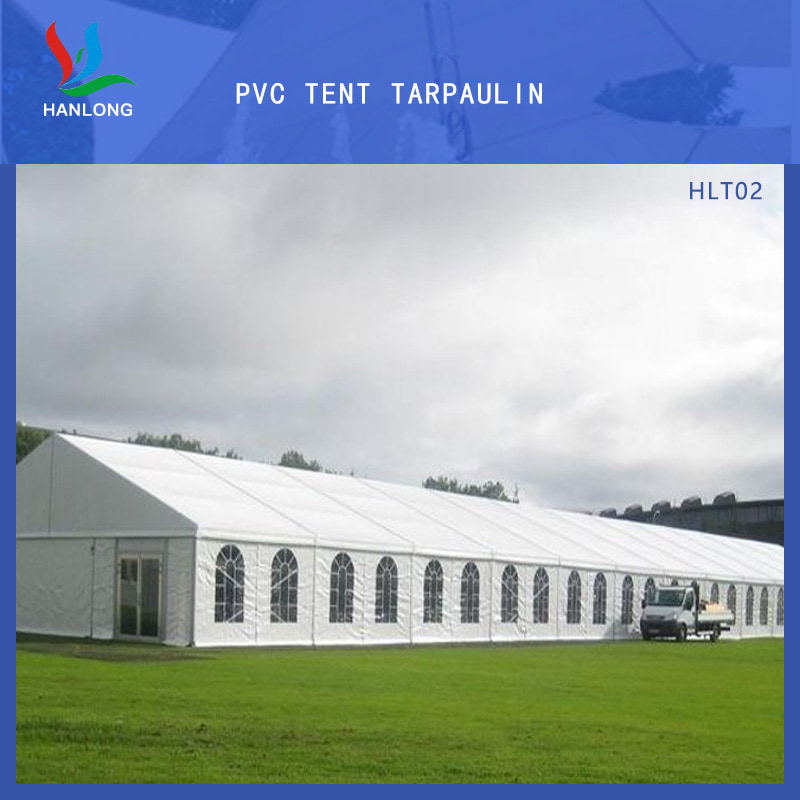 Custom 1000D 20X20 610G 650G PVC Tent Tarpaulin Suppliers, Company - ZheJiang HaZheJiang Hanlong New Material Co.,Ltd is China 1000D 20X20 610G 650G PVC Tent Tarpaulin suppliers and OEM company, Item HLT02 Weight (GS...View Product →
UV and flame requirements change with use. A festival roof spends its life in direct sun and must meet a flame standard, while an expedition shelter faces abrasion, UV and cold cracking at the same time. A heavier 1300D x 1300D camouflage vinyl, such as Hanlong's 1050 gsm camouflage tent fabric, is coated for exactly that combination of conditions.
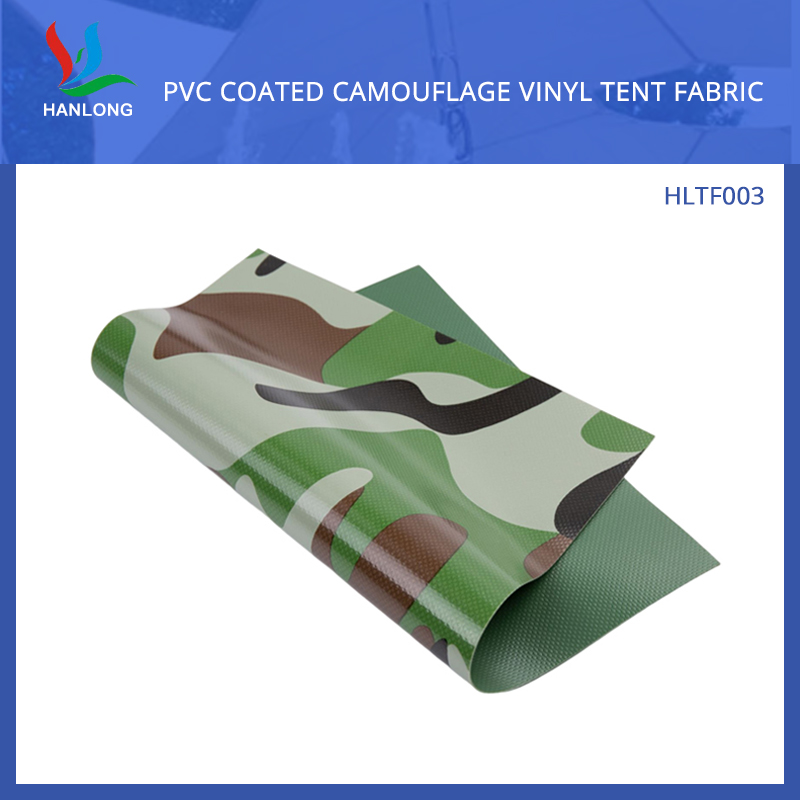 Custom PVC Coated Camouflage Vinyl Tent fabric 1300DX1300D 20X20 1050GSM SuppliZheJiang Hanlong New Material Co.,Ltd is China PVC Coated Camouflage Vinyl Tent fabric 1300DX1300D 20X20 1050GSM suppliers and OEM compa...View Product →
The Incoming Inspection Workflow
Inspection starts at the supplier's coating line, but the buyer's receiving inspection is where most quality disputes are actually resolved, so it has to follow a repeatable sequence.
- Check the label and batch documents. Roll number, declared width, weight, coating side and flame certificate should all match the order.
- Unroll a short length and scan the surface for tackiness, plasticizer bleed, odor, coating streaks, pinholes and contamination.
- Measure width and thickness at the start, middle and end of the roll using a steel tape and a fabric thickness gauge.
- Cut five 100 cm2 samples across the width and weigh them to verify gsm against the mill sheet.
- Run bench-level checks: yarn density count, coating adhesion peel and a cold bend test at the specified temperature.
- Send samples for machine tests on tensile, tear and hydrostatic head unless the supplier's certificate covers the same lot.
- Mark the roll clearly as accept, accept with noted deviations, hold for retest, or reject, and record the result in the batch log.
Keep one linear meter from every inspected roll as a reference sample. If a field failure appears later, that sample is the only evidence that separates a batch problem from a fabrication problem.
Common Defects and How to Read Them
Most coated tent fabric defects can be seen with the naked eye on a well-lit inspection table, and a consistent naming system keeps buyer and supplier language the same.
| Defect | Visual sign | Likely cause | Typical disposition |
| Pinholes | Tiny light points visible against backlight | Air bubbles in plastisol, dust on coating knife | Reject if concentrated, otherwise cut out |
| Coating streaks | Glossy or bare lines running down the web | Worn doctor blade, unstable coating gap | Reject the affected section |
| Surface tackiness | Sticky feel, strong smell, rolls blocking | Over-plasticized topcoat, under-curing | Hold; retest cold crack and adhesion |
| Wrinkles | Permanent crease line across the roll | Winder tension loss, crushed roll in transit | Cut out or downgrade |
| Off-width | Width below the declared figure | Slitting misalignment | Reject or re-slitting at supplier cost |
| Shade variation | Color shift across width or between rolls | Pigment dosing drift, oven temperature spread | Sort by shade and use in the same batch |
A defect on the first roll of a batch is rarely isolated. If gsm is low on roll one, retest rolls two and three before rejecting the delivery, because coating lines drift during a production day and one bad roll does not always condemn the lot.
Agree on a written defect dictionary with your supplier before the first shipment, so words like pinhole or streaky mean the same thing on both sides of the invoice.
Manufacturer Quality Control and the Buyer's Checklist
A manufacturer that weaves its own scrim and coats it in the same plant can trace a test failure back to a process setting; a trader cannot, and that is the main reason vertical production matters in coated fabrics.
What a vertical manufacturer should control
- Base fabric: yarn tension, density and defect-free weaving before coating.
- Plastisol formulation: plasticizer level, flame additives and UV stabilizers dosed consistently.
- Coating line: gap, temperature and speed settings that keep gsm inside tolerance.
- Inline inspection: full-width scanning for pinholes and streaks before winding.
What the buyer should verify at receiving
- Document check: batch number, width, gsm and flame certificate.
- Weight and density: quick gsm samples on 10% of rolls or a minimum of one roll.
- Visual pass: full inspection on an inclined table for pinholes, tackiness and wrinkles.
- Spot mechanical tests: tear, adhesion and cold flex on the first roll of any new construction.
A sensible purchasing rule is to test hard on the first delivery of a new construction, then move to certificate-based checking on repeat orders with the same batch profile. For a 1000D x 23 x 23 sheet such as Hanlong's 750g-850g PVC tent tarpaulin, the buying decision usually rests on whether the heavier coating is justified by the expected service life.
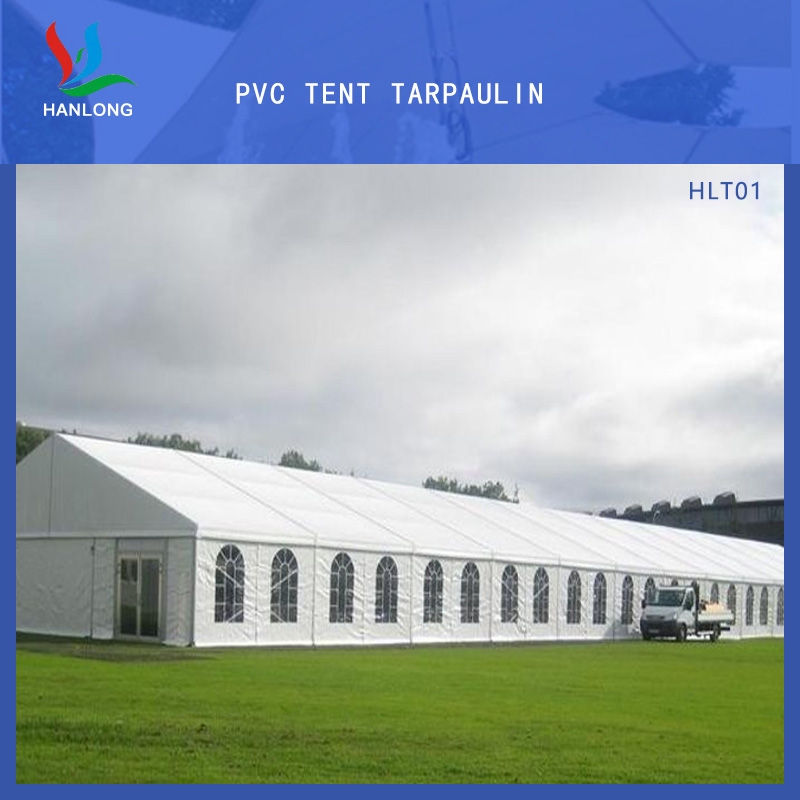 Custom 1000D 23X23 850G 750G PVC Tent Tarpaulin Suppliers, Company - ZheJiang HaZheJiang Hanlong New Material Co.,Ltd is China 1000D 23X23 850G 750G PVC Tent Tarpaulin suppliers and OEM company, Item HLT01 Weight (GS...View Product →
The same order of checks applies across the wider tarpaulin range; the complete guide to judging PVC tarpaulin quality walks through the practical sequence for a mixed purchase.
Frequently Asked Questions
Which single test matters most for PVC tent fabric?
Tear strength, because tents fail through small cuts that grow under wind load long before the whole panel ruptures. Check trapezoid tear values together with basis weight; neither protects the tent on its own.
What gsm tolerance should be specified for tent fabric?
+/-5% is the most common commercial tolerance for PVC coated fabrics, and +/-3% is achievable for critical constructions on a stable coating line. Reject a delivery only when the sample average across a roll sits below the specified minimum, not because of one sample point.
How many rolls should be inspected from a delivery lot?
Inspect every roll visually and test at least one roll mechanically for small deliveries. For larger lots, use an acceptance sampling plan such as AQL General Inspection Level II, with a maximum acceptable percent defective of 2.5 for non-critical defects and 1.0 for gsm or tear failures.
Can flame retardancy be verified without a laboratory?
A certified test to EN 14115, NFPA 701 or CPAI-84 must come from the supplier and match the batch number. A small flame applied to the selvedge gives only a rough indication that flame-retardant additives are present and must never replace laboratory certification.
Acceptance criteria should be written, signed and attached to the order. Verbal agreements on gsm tolerance or defect limits are the most common source of rejected deliveries.



 Home
