
Article Directory
- 1 Not a Single Process: What “PVC Coated Tent Fabric” Really Means
- 2 Step 1: Weaving the Polyester Base Fabric
- 3 Step 2: Pretreatment and Heat Setting
- 4 Step 3: Coating or Lamination
- 5 Step 4: Fusing, Surface Finishing, and Printing
- 6 Step 5: Quality Control and Testing
- 7 What This Means for Tent Fabric Buyers
Not a Single Process: What “PVC Coated Tent Fabric” Really Means
When a buyer asks how PVC coated tent fabric is made, the real question is usually why similar-looking rolls perform so differently in the field. The answer is that this material is not simply a piece of cloth dipped into liquid PVC. It is an engineered composite built in a sequence of controlled steps: selecting and weaving a polyester base fabric, stabilizing it, applying a PVC compound by coating or lamination, fusing and finishing the surface, and finally testing the finished roll for weight, strength, and weather resistance. Each step changes the cost, the feel, and the service life of the tent.
In short, the manufacturing route is:
- Weave polyester yarn into a base fabric.
- Heat-set and pretreat the fabric to improve dimensional stability.
- Apply a PVC compound through coating or lamination.
- Fuse, emboss, print, or otherwise finish the surface.
- Inspect and test for GSM, tensile strength, tear strength, UV resistance, and flame retardancy.
For a broader look at the same production logic, read how tarpaulins are made in general.
Step 1: Weaving the Polyester Base Fabric
Every PVC coated tent fabric starts with a woven polyester scrim. Polyester filament yarn is chosen for its high tensile strength, low stretch, and resistance to rot and mildew. The two numbers that matter most at this stage are the yarn denier and the thread count.
Yarn Denier and Thread Count
Denier describes the linear density of the yarn. A 500D yarn is lighter and more flexible; a 1000D or 1300D yarn is heavier, stiffer, and more resistant to tearing. Thread count, written as pairs like 20×20, describes the number of warp and weft yarns per inch. A higher thread count produces a denser, stronger base fabric but also increases weight.
Tent fabric specifications therefore read like a material recipe. For example, a common specification for frame tents is 1000D×1000D with 20×20 threads per inch and a finished weight around 610–650 gsm. We supply this type of base construction as a 1000D×1000D 20×20 610–650 gsm PVC tent tarpaulin. The same recipe can be adjusted: lighter 300D–500D fabrics for consumer camping shelters, heavier 1300D fabrics for military tents or long-term installations.
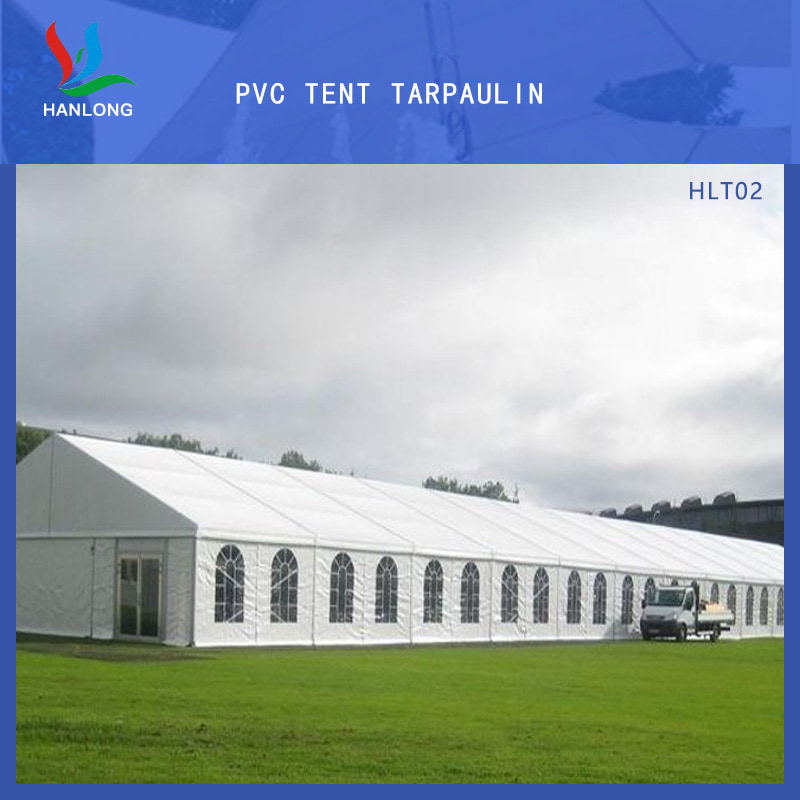 Custom 1000D 20X20 610G 650G PVC Tent Tarpaulin Suppliers, Company - ZheJiang HaZheJiang Hanlong New Material Co.,Ltd is China 1000D 20X20 610G 650G PVC Tent Tarpaulin suppliers and OEM company, Item HLT02 Weight (GS...View Product →
Why the Base Fabric Determines Performance
The weaving stage produces what the industry calls greige fabric. At this point it is still off-white, unsized, and has no waterproofing. Most tent fabric quality problems originate here, because the greige fabric’s uniformity determines how evenly the PVC layer will be absorbed and how consistent the final GSM will be.
If the base fabric is weak, no amount of PVC will fix it. Tear strength in a finished tent fabric comes mostly from the polyester scrim. A loosely woven base with low denier will tear easily even if the PVC coating is thick. That is why manufacturers with in-house weaving, such as our own weaving plant, control quality from the first beam of yarn rather than buying finished greige fabric with unknown history.
Step 2: Pretreatment and Heat Setting
Woven polyester needs to be stabilized before coating. During heat setting, the fabric is heated under controlled tension to relax internal stresses. This reduces shrinkage and prevents the finished tent fabric from wrinkling or distorting when it sits in the sun. The fabric is also cleaned and sometimes treated with adhesion promoters so the PVC compound bonds tightly to the polyester surface.
Heat setting is normally done at temperatures around 180–220°C, depending on the polyester type. The fabric is held at width while heated, then cooled rapidly. This is not the same as curing the PVC coating, which comes later.
Skipping this step is a common shortcut among low-cost producers. The result is poor dimensional stability: a tent panel that looks straight when new can pucker after a few hot days. Buyers should ask their supplier whether heat setting is part of the process, not just whether the fabric is waterproof.
Step 3: Coating or Lamination
This is the step that creates the PVC layer on top of and around the polyester yarns. Two production routes dominate the market: direct coating and film lamination.
Direct Coating
In the coating process, a PVC paste or plastisol is spread onto the moving fabric with a knife or roller, then passed through an oven to fuse the PVC into a continuous layer. Coating tends to penetrate the yarns more deeply, producing good adhesion and a relatively tight, flexible hand feel. It is often used for tent fabrics that need to fold repeatedly, such as camping tents and quickly deployable shelters.
Film Lamination
In lamination, a pre-calendered PVC film is bonded to the polyester base under heat and pressure. This route gives a smooth, uniform surface and is efficient for large production runs. Laminated fabrics are commonly used for larger structures, advertising tents, and applications where surface appearance and print quality matter more than drape.
The PVC compound itself is a mixture. PVC resin is combined with plasticizers for flexibility, stabilizers for heat and light resistance, flame retardants, pigments, and fillers. The same 1000D base fabric can produce a soft camping tent fabric or a stiff frame tent fabric simply by changing the plasticizer level and the coating thickness. That is why the compound formula is often the supplier’s proprietary knowledge.
The practical differences are explained in more detail in our comparison of coated versus laminated PVC tarpaulin construction. For tent buyers, the choice affects stitchability, weldability, and long-term flexibility.
| Property | Direct Coating | Film Lamination |
|---|---|---|
| PVC penetration into yarns | High | Lower |
| Surface smoothness | Depends on finishing | Very smooth |
| Flexibility | Generally softer | Stiffer at same weight |
| Common tent uses | Camping tents, folding shelters | Frame tents, promotional tents |
Step 4: Fusing, Surface Finishing, and Printing
Once the PVC layer is applied, the fabric passes through cooling rolls and then into finishing processes that determine its final surface properties.
Embossing and Anti-Slip Finishes
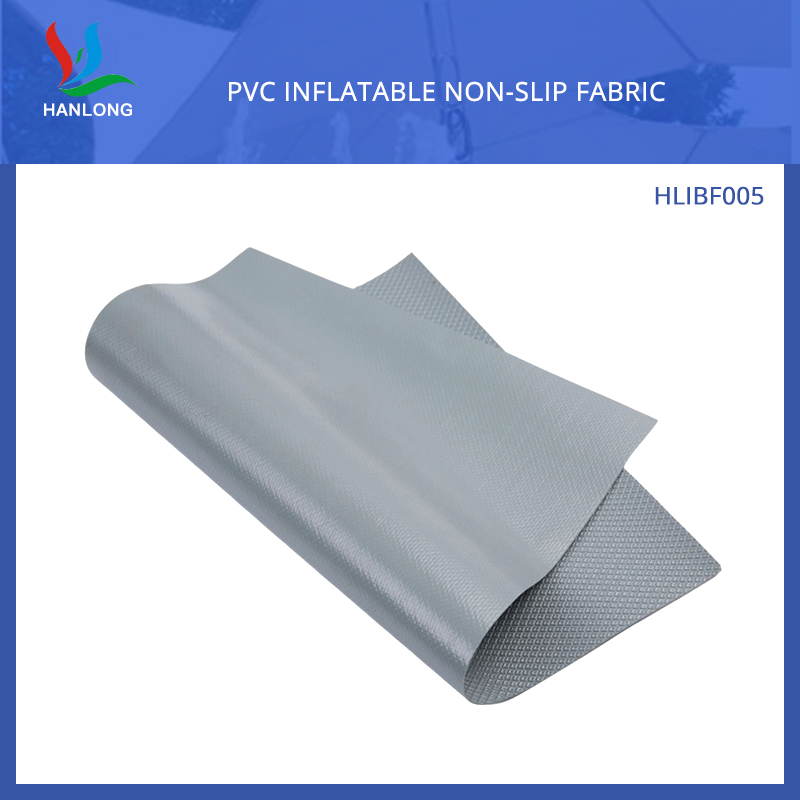
Embossing presses a texture into the PVC surface. A matte or diamond texture reduces glare and increases slip resistance, which is useful for tent flooring or staged structures. A glossy finish, by contrast, is easier to clean and is often requested for decorative tents.
Camouflage and Custom Printing
Many tent fabrics are printed before or after coating. PVC can be printed with solvent-based inks, and the printed layer is then protected by a clear topcoat or by welding a second thin PVC film over it. Military-style tents, for example, require a durable camouflage pattern that does not fade after months of UV exposure. Our PVC coated camouflage vinyl tent fabric is produced this way, using a 1300D base for high tear resistance.
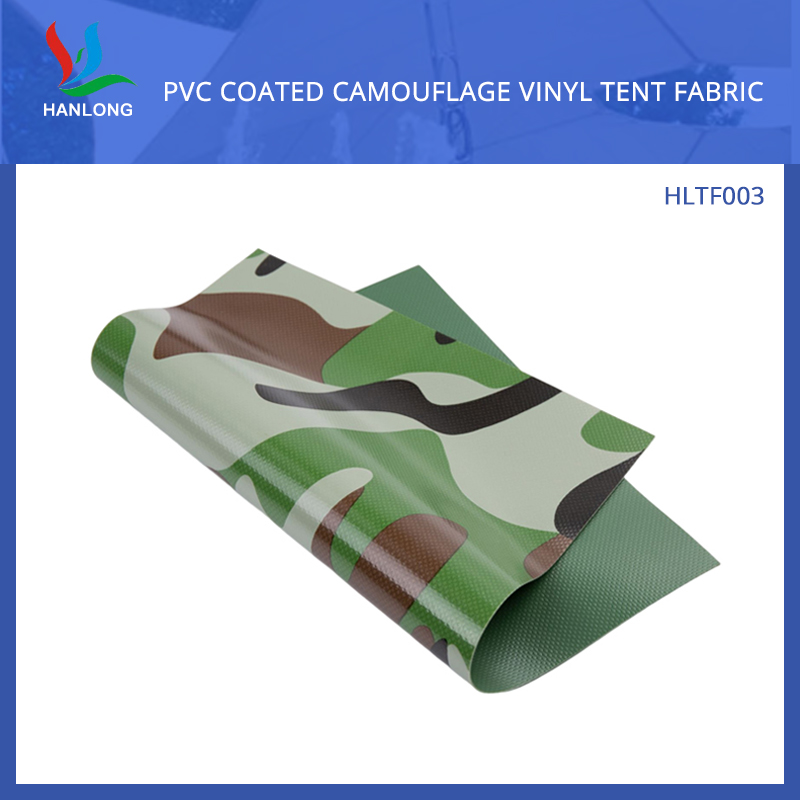 Custom PVC Coated Camouflage Vinyl Tent fabric 1300DX1300D 20X20 1050GSM SuppliZheJiang Hanlong New Material Co.,Ltd is China PVC Coated Camouflage Vinyl Tent fabric 1300DX1300D 20X20 1050GSM suppliers and OEM compa...View Product →
Flame retardants and UV stabilizers are not surface coatings that wash off; they are dissolved and dispersed inside the PVC layer. Anti-mildew agents and pigments are also incorporated into the compound before fusing, not sprayed on afterward.
Step 5: Quality Control and Testing
The last step is what separates a reliable tent fabric from a roll that fails in the field. In our plant, quality control starts with the incoming yarn and continues through weaving, coating, and final finishing.
Weight and GSM Tolerance
Finished weight is expressed in grams per square meter (gsm). A buyer who orders 650 gsm tent fabric should receive material within a tight tolerance; large deviations change both strength and price. GSM checks are done on samples from every batch. For more on what to expect, see our note on GSM consistency and tolerance.
Mechanical and Weather Testing
Typical laboratory checks include tensile strength, tear strength, hydrostatic head for waterproofness, cold crack temperature for flexibility, accelerated UV aging for colorfastness, and flame spread tests when required. These tests simulate real conditions: a tent in a desert, a tent in a monsoon, or a tent that has to be folded and unfolded hundreds of times.
Testing methods vary by region. In Europe, EN 14115 is a common flame test for tent and awning fabrics; in North America, CPAI-84 is widely used for camping tentage. A supplier serving global buyers should be able to state which standard a given product meets, not just claim that it is flame retardant.
What This Means for Tent Fabric Buyers
The manufacturing process explains why two rolls of “PVC tent fabric” can look identical but perform very differently. A dense, high-quality polyester base, proper heat setting, a correctly formulated PVC compound, and controlled finishing are all required in combination.
When you evaluate a supplier, ask specifically how the base fabric is woven, whether heat setting is included, which coating or lamination line is used, and what tolerances are held for weight and strength. A direct manufacturer can answer these questions with production data rather than a sales brochure.
Many buyers start with a thickness or weight in mind, but the more useful exercise is to define the tent’s expected lifetime and environment. A seasonal promotional tent and a permanent safari lodge tent place very different demands on the fabric, even though both are called “tent fabric.” For large frame tents or structures that will remain installed for many seasons, a heavier specification often makes sense. One example is 1000D 23×23 750–850 gsm PVC tent tarpaulin, which is designed for high wind-load applications.
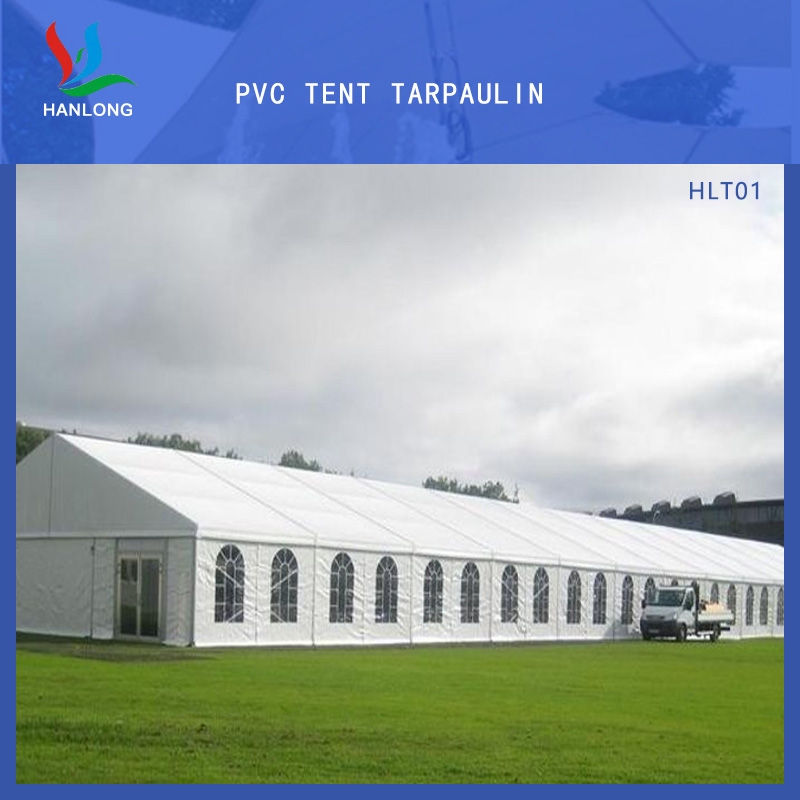 Custom 1000D 23X23 850G 750G PVC Tent Tarpaulin Suppliers, Company - ZheJiang HaZheJiang Hanlong New Material Co.,Ltd is China 1000D 23X23 850G 750G PVC Tent Tarpaulin suppliers and OEM company, Item HLT01 Weight (GS...View Product →
Understanding the process does not make you a coating engineer, but it gives you the vocabulary to ask the right questions, compare quotes fairly, and avoid buying on price alone.



 Home
